
UNICEF trains Kaduna health officials on gender-responsive care
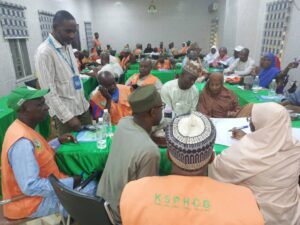
In a bid to strengthen gender-responsive healthcare, UNICEF concluded a week-long capacity-building workshop for Officers-in-Charge (OICs) from Primary Health Care centres (PHCs) in Kaduna on Saturday.
The OICs, from Zaria, Sabon Gari, and Makarfi Local Government Areas (LGAs), were trained on the intersection of gender and access to immunisation and other PHC services.
Dr Idris Baba, UNICEF Health Specialist and Gender Focal Person, explained that the training aimed to improve understanding of how gender dynamics influenced healthcare access.
He highlighted that the selected LGAs had poor health indicators, particularly in health-seeking behaviours and service coverage. One key challenge identified during the workshop was the lack of proper data collection tools. Baba emphasised the importance of the tools for monitoring progress and informed decision-making.
He also addressed societal power dynamics that impacted healthcare access, citing instances where household power structures, such as decision-making between husbands and wives or grandparents, affected health service utilisation.
“To sustain the momentum, UNICEF plans to organise community town hall meetings as follow-up actions, engaging key stakeholders like traditional leaders, religious figures, and women’s groups.”
Baba stressed that gender equity was not about favouring one group but ensuring everyone received the support they needed.
He called on the government to create policies promoting gender equity, emphasising that justice meant removing structural barriers and providing equal opportunities, particularly in education and healthcare.
Isah Yushau, Education Officer at the Kaduna State Primary Health Care Board, reiterated the commitment to address gender-related barriers, particularly for women and children.
He pointed out that gender inequities were a significant challenge to healthcare access in the state, particularly among marginalised groups.
Yushau emphasised the importance of involving community and religious leaders in the conversation to ensure equitable healthcare access for all.
He added that both the government and development partners play crucial roles in supporting equitable healthcare in Kaduna.
Hadiza Shika, a participant from the PHC Samaru in Sabon Gari LGA, described the training as an “eye-opener.”
She highlighted the importance of understanding the difference between sex and gender and how gender identity affected healthcare services.
Shika also emphasised the need for better data disaggregation, particularly in capturing critical socioeconomic indicators like location, economic status, and education, to better address healthcare challenges at the community level.
The News Agency of Nigeria (NAN) reports that the initiative also included ward community engagement focal persons and state social mobilisation officers, further broadening the scope of its impact.
About Post Author
